Comparison
Ceramic vs oil-filled heaters
The short answer
Both are electric, both cost the same per kilowatt-hour, and they suit completely different situations. Here is how to tell which one your room needs.
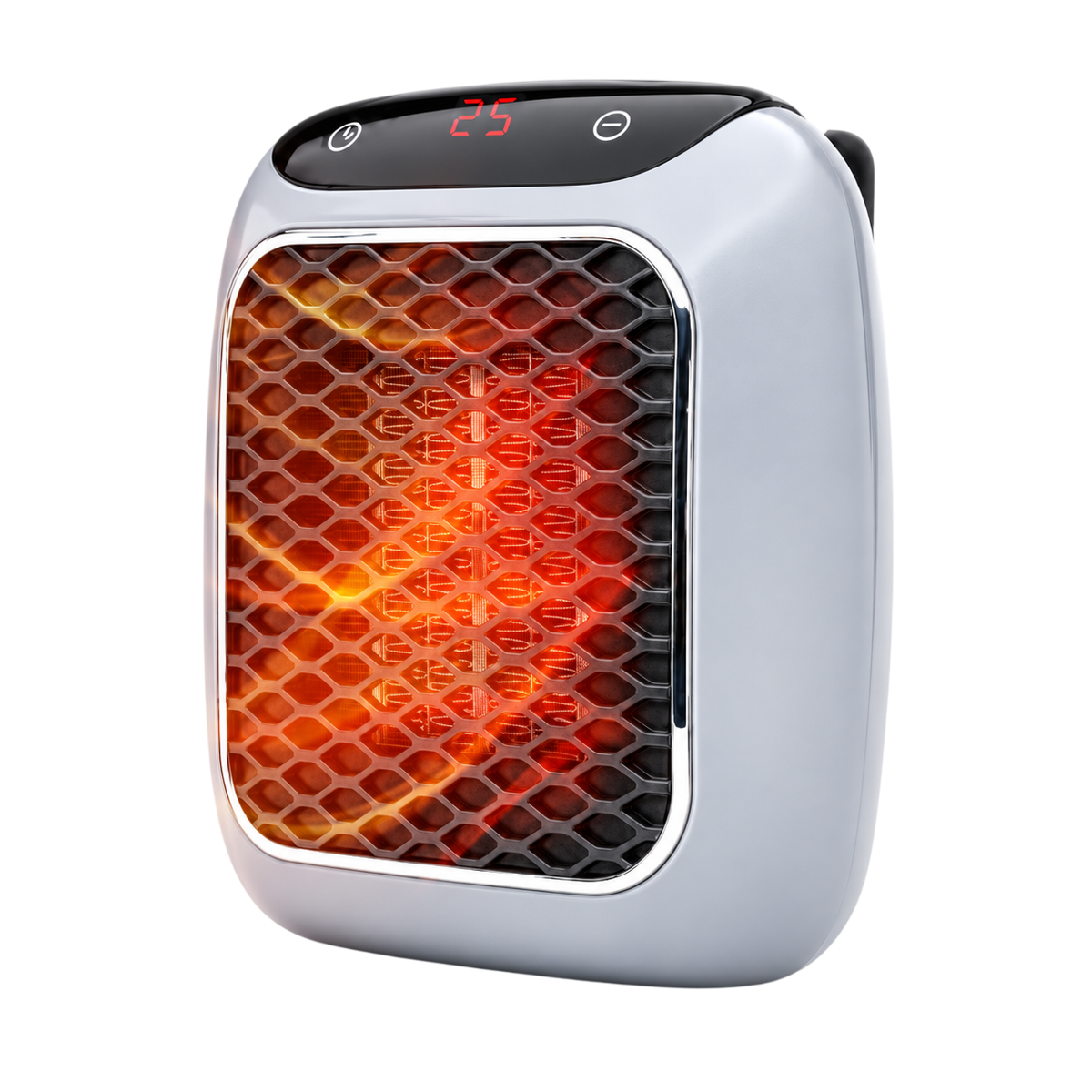
Side by side
| Ceramic (PTC) heater | Oil-filled radiator | |
|---|---|---|
| Time to feel warm | About 5 minutes | 30–45 minutes |
| Heat delivery | Warm air moved by a fan | Radiant and convected heat from a warm surface |
| Noise | Soft airflow | Silent |
| Portability | Light, carry one-handed | Heavy, usually stays put |
| Floor space | Sits on a shelf or plugs into a socket | Takes a radiator-sized footprint |
| Best for | Short sessions and rooms you use on and off | One room kept warm for many hours |
| Heat after switch-off | Stops quickly | Keeps releasing heat as the oil cools |
| Typical safety | Overheat cut-off, cool housing | Hot surface, no fan |
Do they cost the same to run?
Per unit of electricity, yes. A 1 kW ceramic heater and a 1 kW oil-filled radiator both draw 1 kWh per hour at full power, so at the same unit rate they cost the same for that hour. Any claim that one type is inherently "cheaper to run" than the other at equal wattage is marketing, not physics.
What differs is how long each runs. A ceramic heater reaches temperature in minutes, so if you only want warmth for an hour you pay for roughly an hour. An oil-filled radiator takes half an hour or more to get going, so short sessions waste much of the energy on warming the oil — but it keeps radiating after switch-off, which pays back over a long evening. Our running costs guide shows the maths.
Choose a ceramic heater if…
- You want warmth quickly — a home office in the morning, a bathroom before a shower.
- You use the room on and off rather than all day.
- You want to move the heater between rooms.
- Floor space is tight.
- You want a timer and remote so it is only on when you need it.
Choose an oil-filled radiator if…
- You want one room warm continuously for many hours.
- Absolute silence matters more than speed — a light-sleeper's bedroom, for example.
- You do not mind a heavy unit permanently taking floor space.
- You dislike any sensation of moving air.
What about fan heaters and halogen heaters?
A basic fan heater is essentially a cheaper, louder ceramic heater, often with no thermostat — which makes it the most expensive option to run despite the lowest purchase price. Halogen heaters warm objects and people directly rather than the air, which feels pleasant if you sit right in front of them, but the room itself stays cold and they are easy to knock over.
The practical answer for most UK rooms
For the single most common need — "this one room is too cold and I don't want to heat the whole house" — a ceramic plug-in heater with a thermostat, a timer and a remote is the better fit, because the job is intermittent and the room is small. That is exactly what RapidHeat is designed for: comfortable warmth in a room of up to about 12 m² in roughly five minutes, then a thermostat that holds it there.
Read next: best plug-in heaters buying guide or RapidHeat compared with the alternatives.
Ready to warm your room in about 5 minutes?
Order RapidHeat today with free tracked UK delivery and a 30-day money-back guarantee.