Heater types
Fan heaters: fast heat, with trade-offs
The short answer
A fan heater blows air across a hot metal element. It is the cheapest heater to buy and the quickest to feel — and the reason so many end up in the loft after one winter.
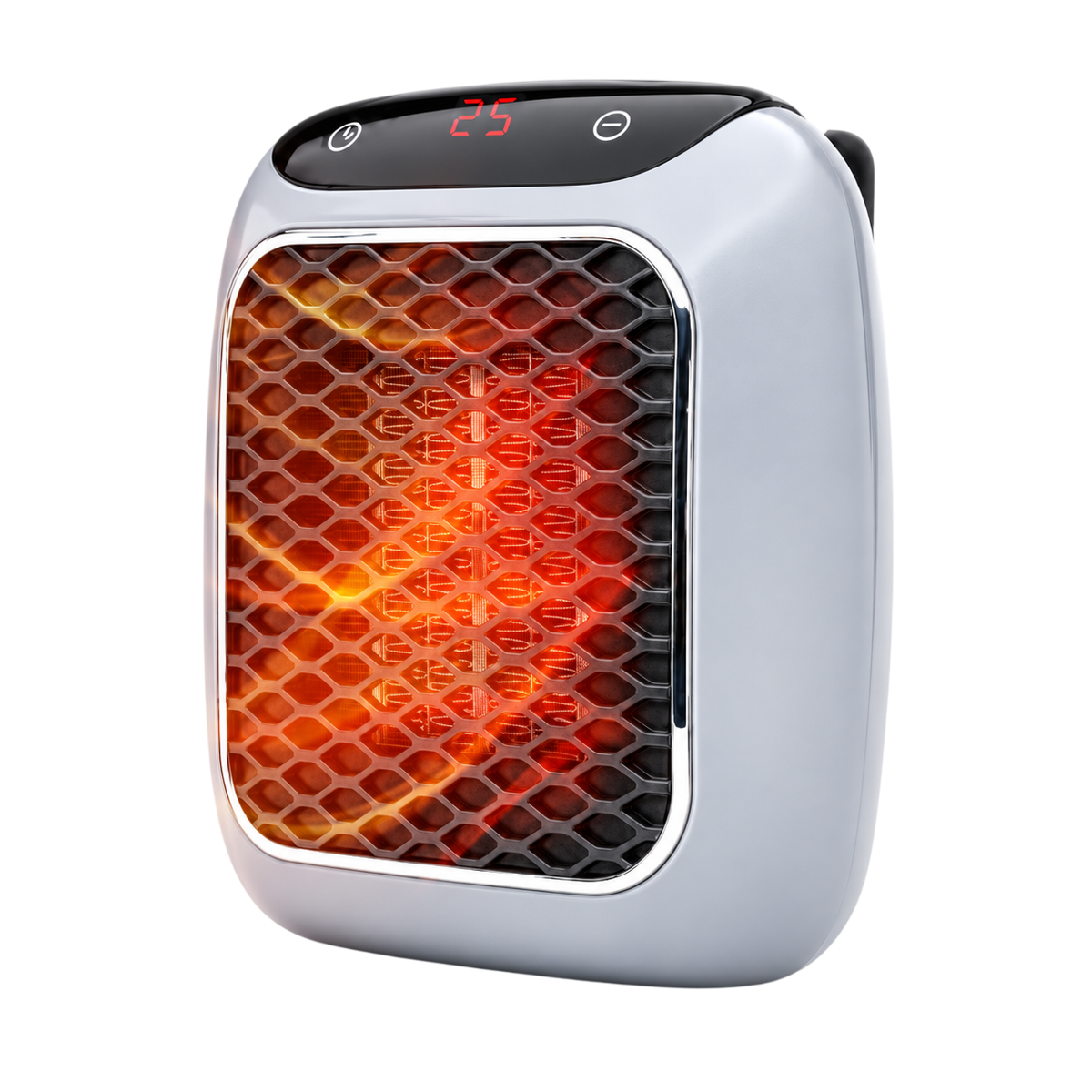
How a fan heater works
Electricity heats a coiled wire element until it glows. A fan pushes room air across it and out of the front grille. Because the air is moving, you feel warmth within seconds — much faster than a radiator that has to warm itself first. The downside is that everything you feel depends on the fan continuing to run.
What fan heaters are good at
- Instant warmth. Useful when you come in cold and want heat now.
- Low purchase price. Basic models start under £20.
- Light and portable. Easy to carry between rooms.
Where they fall down
- Noise. A bare fan heater is loud enough to intrude on a phone call, a film or sleep.
- Stuffy, dry air. A very hot exposed element scorches airborne dust, which produces that familiar burnt smell.
- Crude controls. Many have only high, low and a rotary dial with no real thermostat, so they run at full power all evening.
- Heat stops instantly. Switch off and the warmth disappears with the airflow.
Fan heater vs ceramic heater
| Basic fan heater | Ceramic heater (e.g. RapidHeat) | |
|---|---|---|
| Time to feel warm | Seconds | About a minute, room comfortable in about five |
| Noise | Noticeable | Low hum |
| Element temperature | Very hot exposed wire | Lower-temperature ceramic plates |
| Controls | Often high/low only | Thermostat, timer, remote |
| Cost to run | Higher — usually runs flat out | Lower — cycles off once the room is warm |
Both are electric, so both turn a kilowatt-hour into the same amount of heat. The saving comes from the thermostat, not from any magic in the technology. See running costs for the arithmetic.
What a fan heater costs per hour
A common 2,000 W fan heater draws 2 kW. At roughly 27p per kWh that is about 54p an hour at full power, or around £2.70 for a five-hour evening. A 1,200 W ceramic heater with a working thermostat typically runs at part load once the room is up to temperature, so the same evening often lands well under half that. This is why controls matter more than wattage on the box.
Using one safely
- Plug directly into a wall socket, never through a loaded multi-way adaptor.
- Keep at least a metre clear in front of the grille; never dry clothes on it.
- Do not run a bare fan heater unattended overnight.
- Choose a model with overheat cut-off and, if free-standing, a tip-over switch.
Should you buy a fan heater or something better?
If you need occasional bursts of heat in a garage or utility room and cost of purchase is everything, a fan heater is fine. If the heater will be in a room you actually live in — bedroom, office, lounge — the noise and the missing thermostat will annoy you within weeks. A plug-in ceramic heater with a thermostat, timer and remote solves both problems for a little more up front and usually less on the bill.
Want fast heat without the fan-heater noise?
Order RapidHeat today with free tracked UK delivery and a 30-day money-back guarantee.