Room by room
Desk and home office heaters
The short answer
If you work from home, you may be paying to heat an entire house so that one person can type in comfort. Heating the room you are sitting in is the single easiest saving available.
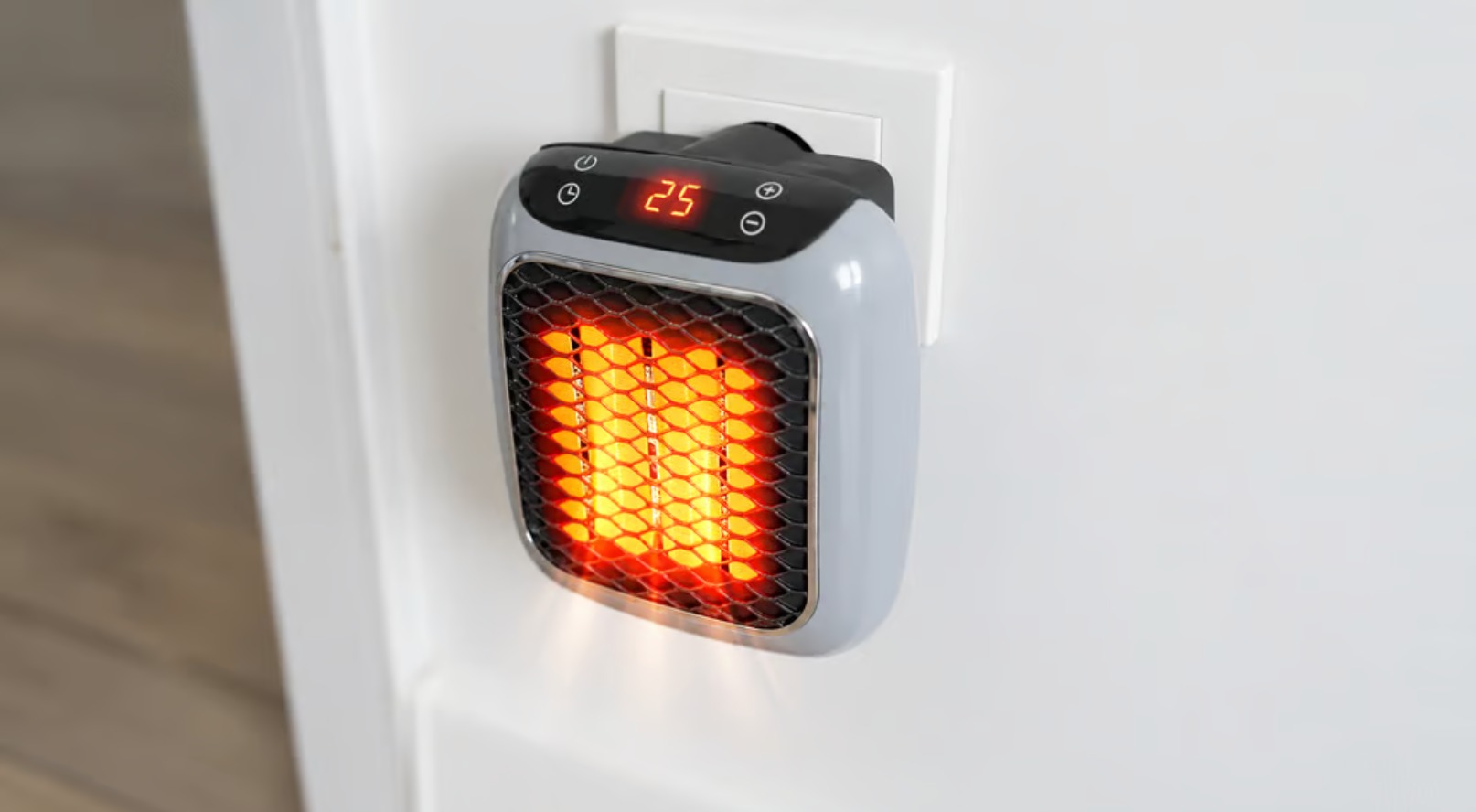
Written and checked by the RapidHeat UK team · Last updated September 2026 · how we work out running costs
Key takeaways
- Warming the person at the desk costs a fraction of warming the building.
- 500–1,200 W is plenty for a footwell or desk area.
- A full working day at 1,000 W is roughly £2 at 27p per kWh — less with a thermostat.
Three approaches, honestly compared
| Approach | Power | Cost per hour at 27p/kWh | Verdict |
|---|---|---|---|
| Personal under-desk heater | 200–600 W | 5p–16p | Warms your legs; the room stays cold |
| Compact ceramic room heater | 1,000–1,500 W | 27p–41p flat out, less with a thermostat | Best all-round for a home office |
| Central heating for the house | Whole system | Typically several pounds a day | Wasteful if only one room is occupied |
Why a warm room beats a warm footwell
Cold hands and a cold nose are what actually stop you concentrating, and a footwell heater does nothing about either. A properly sized room heater brings the whole space to a comfortable temperature in a few minutes and then throttles back — you notice the difference on video calls, not just under the desk.
Setting up a home office for winter
- Close the door. You have just halved the space you need to heat.
- Block the obvious draughts — under the door, around old window frames.
- Position the heater so warm air reaches where you sit, not the back of a cupboard.
- Set the thermostat to 19–20°C rather than maximum.
- Use the timer to start twenty minutes before work and stop at the end of the day.
Noise on calls
Anything with a hard-working fan will be audible to the people you are speaking with. Ceramic heaters on a low fan speed are usually unnoticeable on a headset once the room has reached temperature and the element cycles down. Bare fan heaters are not — see fan heaters.
Can you claim any of it back?
If you are required to work from home, HMRC has allowances for household costs, and self-employed people can apportion heating in their accounts. The rules change, so check the current HMRC guidance or ask your accountant rather than relying on a heater website.
Safety in a room full of cables
- Plug the heater straight into a wall socket, not the extension block feeding your desk.
- Keep paper, cables and a laptop bag clear of the outlet grille.
- Choose a unit with overheat protection and, if free-standing, a tip-over cut-off.
RapidHeat at a desk
Compact enough to sit on a shelf or plug into a socket beside the desk, quick enough to make a study comfortable before your first meeting, quiet enough not to intrude on calls, and controlled by a thermostat and timer so it is not running while you are at lunch. If you also want warmth in a bedroom or lounge, the bundles work out cheaper per heater — see prices.
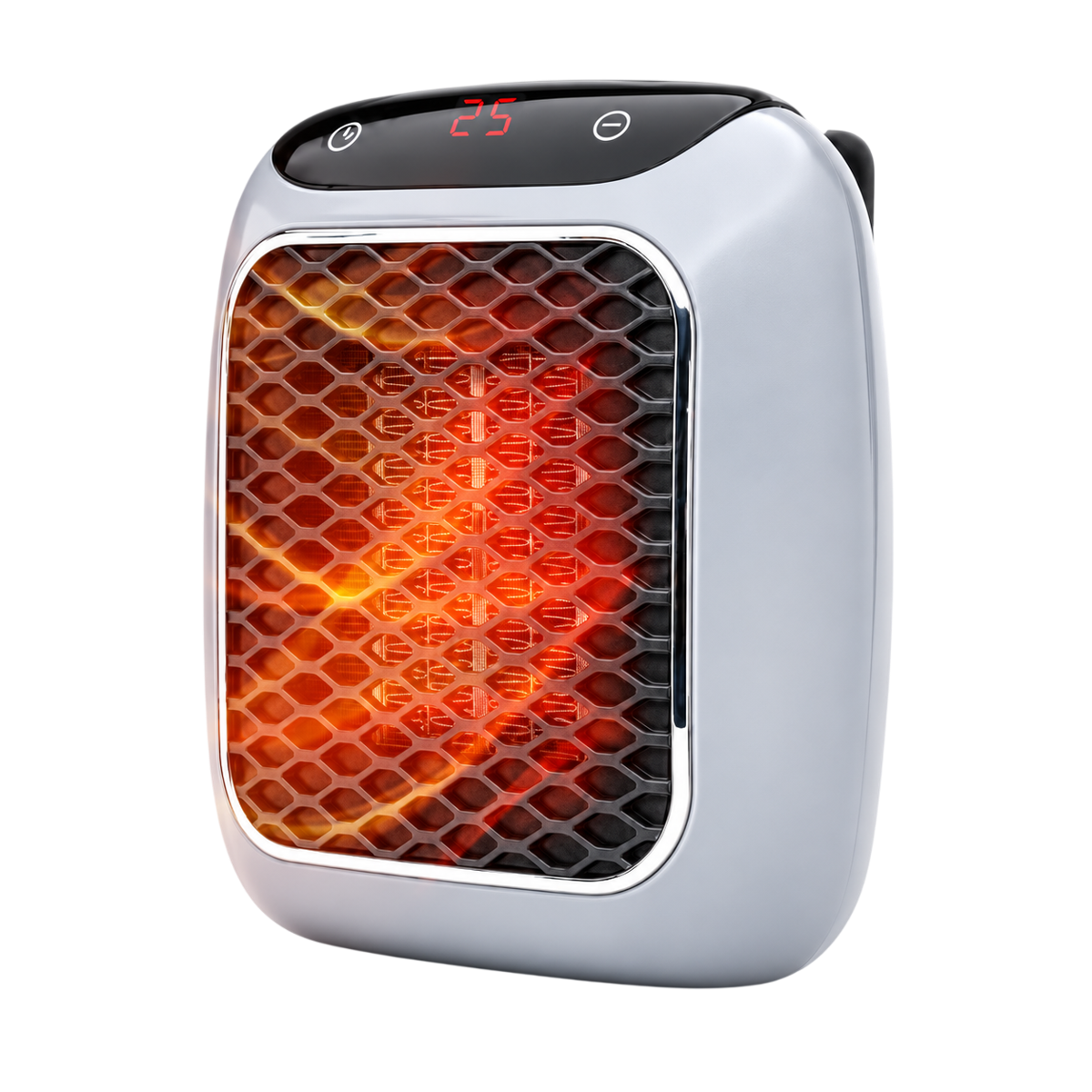
RapidHeat ceramic heater
4.8/5 · 1,247 UK customers£49.95· £89.91 for two · £110.89 for three (about £36.96 each)
- Thermostat, timer and remote
- Warm room in about 5 minutes
- Free tracked UK delivery
- 30-day money-back guarantee





Perfect for my cold office
I have a small office with a door that gets really cold because the building management keeps the winter temperature far too low for comfort. I plugged this into the socket above my desk and now I am warm without anyone even knowing it is there. I love it.
Great in the bathroom
We use it to take the chill off the bathroom before the kids' bath time. Warms up fast and the timer is handy. Four stars only because I wish the display were a little dimmer at night.
Worth being straight about: RapidHeat is built for rooms up to about 12 m². It is not a replacement for central heating and it will not transform an open-plan lounge or an uninsulated garage. If it is not right for your room, send it back within 30 days.
Questions people ask
- How much does a desk heater cost to run all day?
- At 27p per kWh, 500 W is about 14p an hour (£1.10 for eight hours) and 1,000 W about 27p an hour (£2.16). A thermostat cutting in reduces both.
- Where should I put a heater under a desk?
- On the floor to one side, angled towards your legs, at least 30 cm from anything soft, with the flex where you will not catch it on a chair castor. Never run it from a daisy-chained extension lead under the desk.
- Is a desk heater cheaper than heating the room?
- Usually much cheaper, because you are lifting the temperature of a small pocket of air around you rather than the whole room and its walls.
- Can I use a heater in a rented office?
- Check with the building first — some offices restrict them, and many require a PAT-tested appliance. A lower-wattage unit is more likely to be acceptable on a shared circuit.
Work warm without heating the whole house
Order RapidHeat today with free tracked UK delivery and a 30-day money-back guarantee.
Sold direct by RapidHeat UK. Secure checkout, free tracked UK delivery.