Room by room
Heating a shed, workshop or garden room
The short answer
There are two very different jobs here: keeping a building above freezing and dry, and making it comfortable enough to work in. They need different settings and cost wildly different amounts.
Job one: frost protection and damp control
Tools rust, paint spoils and stored equipment suffers because of damp and freezing, not because a shed is chilly. Gentle background heat with a thermostat set low — around 5°C to 8°C — keeps surfaces above dew point on most days. A 500 W to 800 W heater cycling occasionally may only use a few kilowatt-hours a week, which is pence per day at a 27p unit rate. See low wattage heaters.
Job two: working comfort
For hobby time in a timber shed, size the heater to the space and accept that a poorly-insulated building needs continuous input:
- Small insulated shed or garden office up to 8 m²: 1,000–1,200 W
- Workshop 8–14 m² with some insulation: 1,500–2,000 W
- Uninsulated timber shed: spot heating only, whatever the wattage
Insulation beats wattage
A shed lined with insulation board and a breathable membrane holds warmth for hours. The same shed bare loses it in minutes. If you plan to spend real time out there, insulating is a better investment than a bigger heater.
Electrical safety in an outbuilding
- A heater is a heavy, sustained load. Feed an outbuilding with a proper armoured supply and its own protection, installed by a qualified electrician — not a garden extension lead trailing from the kitchen.
- Sockets and the heater itself must stay dry, off the floor and clear of the roof.
- Keep the grille clear of sawdust, wood shavings, sacking and stored fabric, and vacuum it regularly.
- Never store or use flammable liquids or gas near an electric heater.
- Choose a unit with overheat and tip-over protection. Do not leave it unattended.
Timer strategies
For a garden office, start the heater half an hour before you walk out there and let it stop at the end of the day. For frost protection, low thermostat and leave it. Both approaches rely on decent controls — see thermostats and timers.
RapidHeat in a shed or workshop
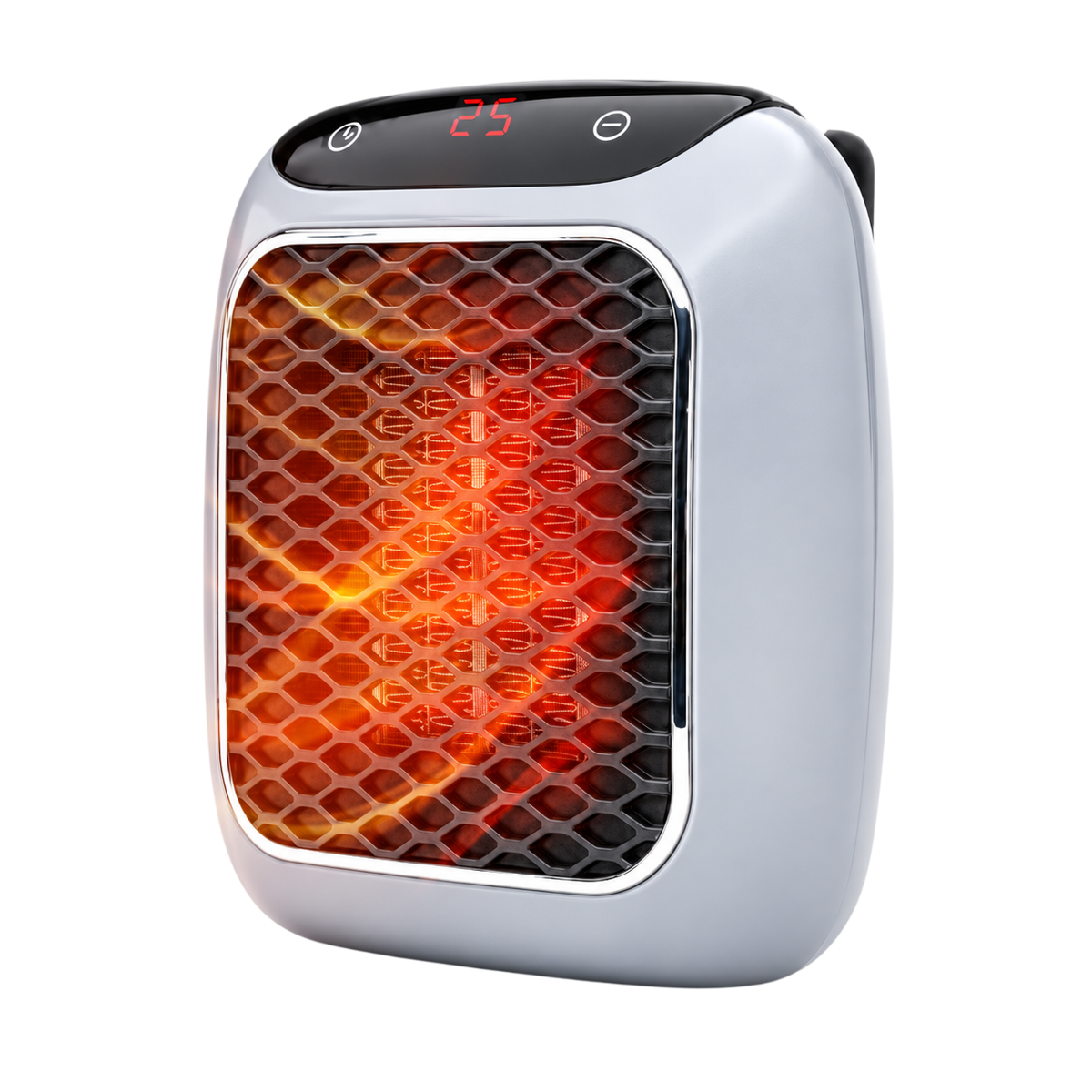
Portable, thermostat-controlled and quick to reach temperature, RapidHeat suits an insulated shed or garden room used in sessions, and works as spot heating in a bigger workshop. It is a domestic room heater, so keep it dry, keep it clear of dust and shavings, and use it while you are present.
Keep the workshop dry and usable
Order RapidHeat today with free tracked UK delivery and a 30-day money-back guarantee.