Heater types
Plug-in radiators, plug-in heaters and plug-in panels
The short answer
Three names are used almost interchangeably online, and they describe quite different products. Knowing which is which stops you buying a slow radiator when what you wanted was quick heat.
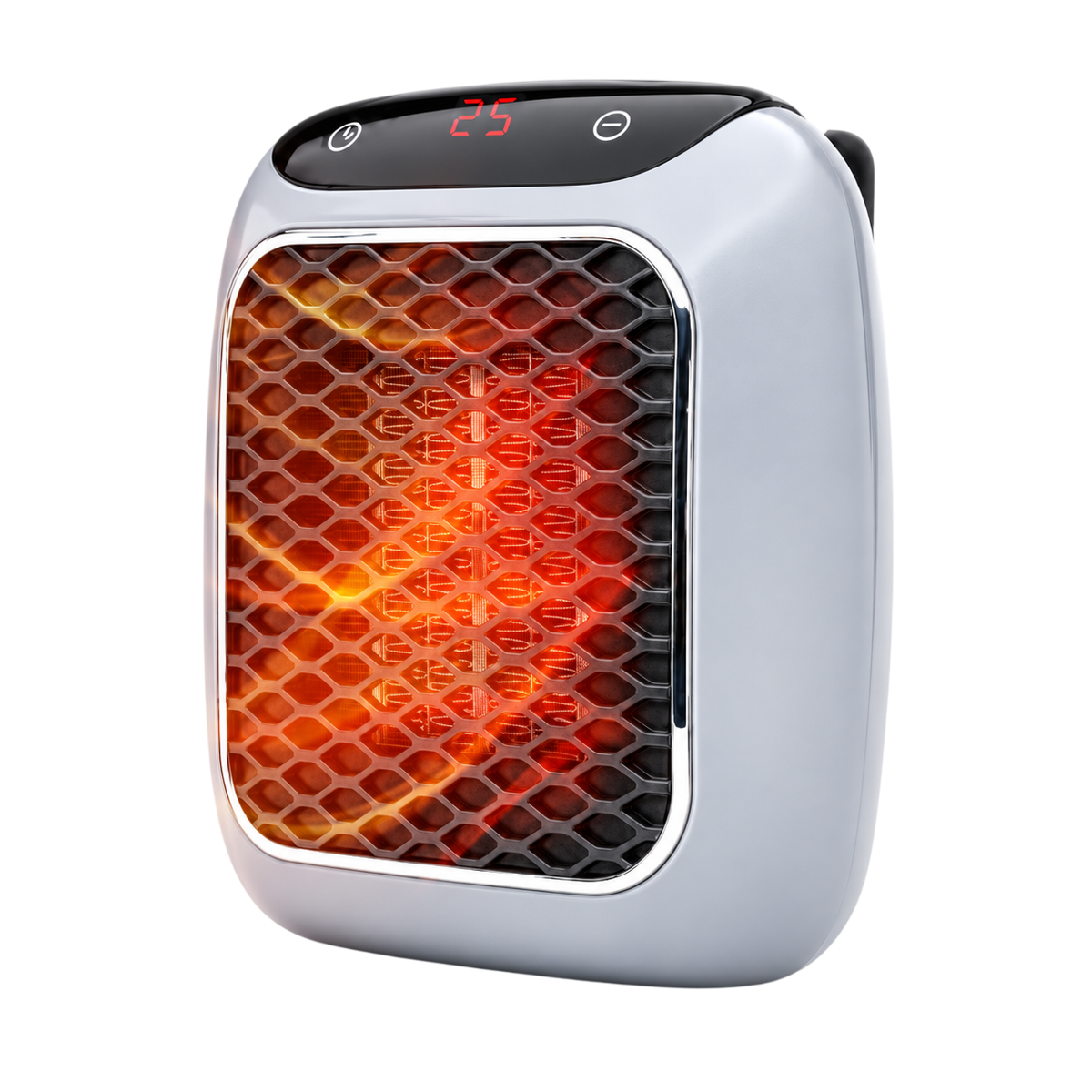
The three things sold as "plug-in radiators"
- Oil-filled electric radiators. Metal columns filled with thermal oil. Slow to warm up, silent, and they keep giving out heat after switch-off. Typically 800 W to 2,500 W and heavy, though most have castors.
- Convector or panel heaters. Slim boxes, often wall-mountable, that warm air as it rises through them. Good gentle background heat and frost protection; slow to make a cold room feel warm.
- Plug-in ceramic heaters. Compact units that plug into a socket and push warm air out with a quiet fan. Fastest of the three for making one room comfortable.
Which to choose for which situation
| Your situation | Best fit | Why |
|---|---|---|
| Sitting in one room all evening, want silence | Oil-filled radiator | No fan noise, retains heat after switch-off |
| Want the room warm quickly, then off again | Plug-in ceramic heater | Useful warmth in minutes, thermostat holds it |
| Frost protection in a hall or spare room | Convector panel | Low output, wall-mounted, out of the way |
| Working at a desk in a cold room | Plug-in ceramic or a small desk heater | Directed warmth where you sit |
| Whole house cold | Central heating | No plug-in appliance is designed for this |
Do plug-in radiators use a lot of electricity?
They use exactly as much as their rating says while they are on. A 2 kW oil-filled radiator costs roughly 54p an hour at 27p per kWh when the element is running; because it cycles once up to temperature, the average over an evening is lower. A 1.2 kW plug-in ceramic heater is about 32p an hour flat out. What decides your bill is total kilowatt-hours: power × time. Smaller room, lower setting, shorter run time. Full workings in running costs.
Safety points specific to plug-in heating
- Always into a wall socket — heaters and extension leads are a poor combination.
- Never cover a radiator or heater to dry washing.
- Leave the air intake clear; blocked intakes trigger overheat cut-offs for a reason.
- Check for overheat protection and, on free-standing units, a tip-over switch.
Where RapidHeat sits
RapidHeat is the third kind: a compact plug-in ceramic heater for rooms up to about 12 m², with a thermostat, timer, remote and overheat cut-off. If your priority is a room that feels warm within five minutes rather than one that stays warm after you leave, it is the better pick. If you want silence and slow, lasting heat, an oil-filled radiator is a fairer choice — the honest comparison is in ceramic vs oil-filled.
Ready to warm your room in about 5 minutes?
Order RapidHeat today with free tracked UK delivery and a 30-day money-back guarantee.