Heater types
Heaters with a thermostat and timer
The short answer
Two heaters of identical wattage can differ enormously in what they cost you across a winter. The difference is almost never the element — it is whether the heater knows when to stop.
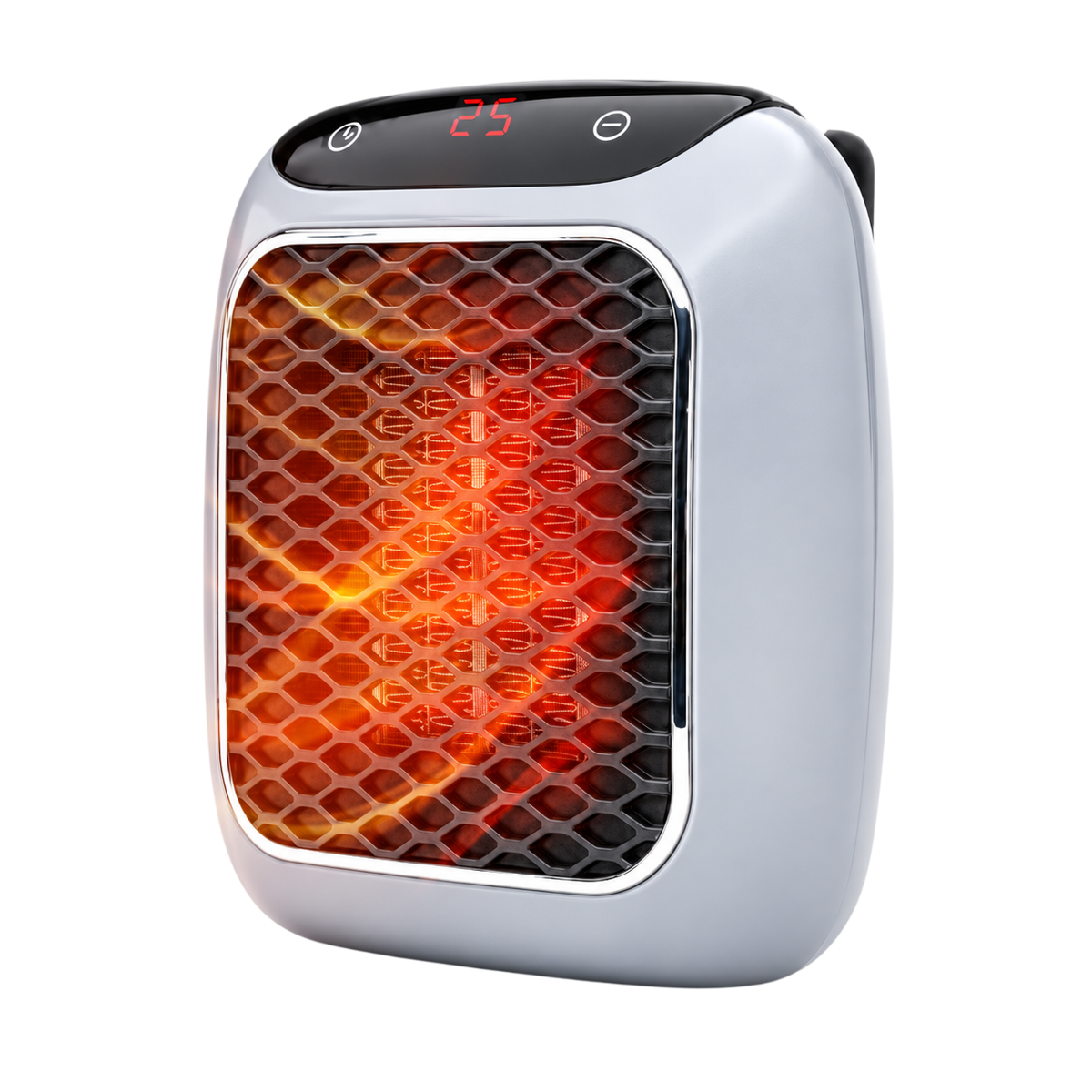
What a thermostat actually does
You set a target temperature. The heater runs at full power until the room reaches it, then cuts the element and only brings it back when the temperature drifts down. Over a five-hour evening a well-controlled 1.2 kW heater might draw 1.5 to 2.5 kWh instead of the full 6 kWh — roughly 40p to 68p instead of £1.62, using a 27p unit rate.
A rotary dial marked "min to max" with no temperature scale is not a thermostat in the useful sense; it just sets output. Look for a numeric target in degrees.
What a timer adds
A timer removes the most expensive habit in home heating: leaving something on because you forgot it. Two patterns work well:
- Pre-heat. One hour before bed, or twenty minutes before you start work in a cold study.
- Auto-off. Two or three hours in the evening, so falling asleep in front of the television does not mean nine hours of heating.
How the two work together
| Setup | Typical evening use | Approximate cost at 27p/kWh |
|---|---|---|
| 1.2 kW, no controls, on for 5 hours | 6.0 kWh | About £1.62 |
| 1.2 kW, thermostat, on for 5 hours | Around 2.0 kWh | About 54p |
| 1.2 kW, thermostat plus 2-hour timer | Around 1.0 kWh | About 27p |
Figures are illustrative and depend on your room, insulation and target temperature, but the direction is consistent: controls beat wattage-hunting every time. See running costs for the method.
Other controls worth having
- Remote control — the difference between adjusting the temperature and putting up with it.
- Oscillation — spreads warmth rather than cooking one side of you.
- Eco or low mode — useful for long, gentle background heat.
- Overheat cut-off — a safety feature, not a comfort one, but never buy without it.
Setting a sensible temperature
Most people are comfortable between 19°C and 21°C in a living room and slightly cooler in a bedroom. Every degree you add costs real money, and turning the dial to maximum does not warm the room faster — it just overshoots your target.
RapidHeat's controls
RapidHeat has an adjustable thermostat with a digital display, a timer, a remote control and an overheat cut-off that shuts the heater down on its own. In practice that means you set a temperature and a window of time, and then stop thinking about the heater — which is exactly how a room heater should behave. See bundle pricing.
Ready to warm your room in about 5 minutes?
Order RapidHeat today with free tracked UK delivery and a 30-day money-back guarantee.