Heater types
Portable ceramic heaters
The short answer
Ceramic heating plates warm up almost immediately, spread heat evenly and run at a lower surface temperature than a glowing wire element. That combination is why they have largely replaced basic fan heaters in living spaces.
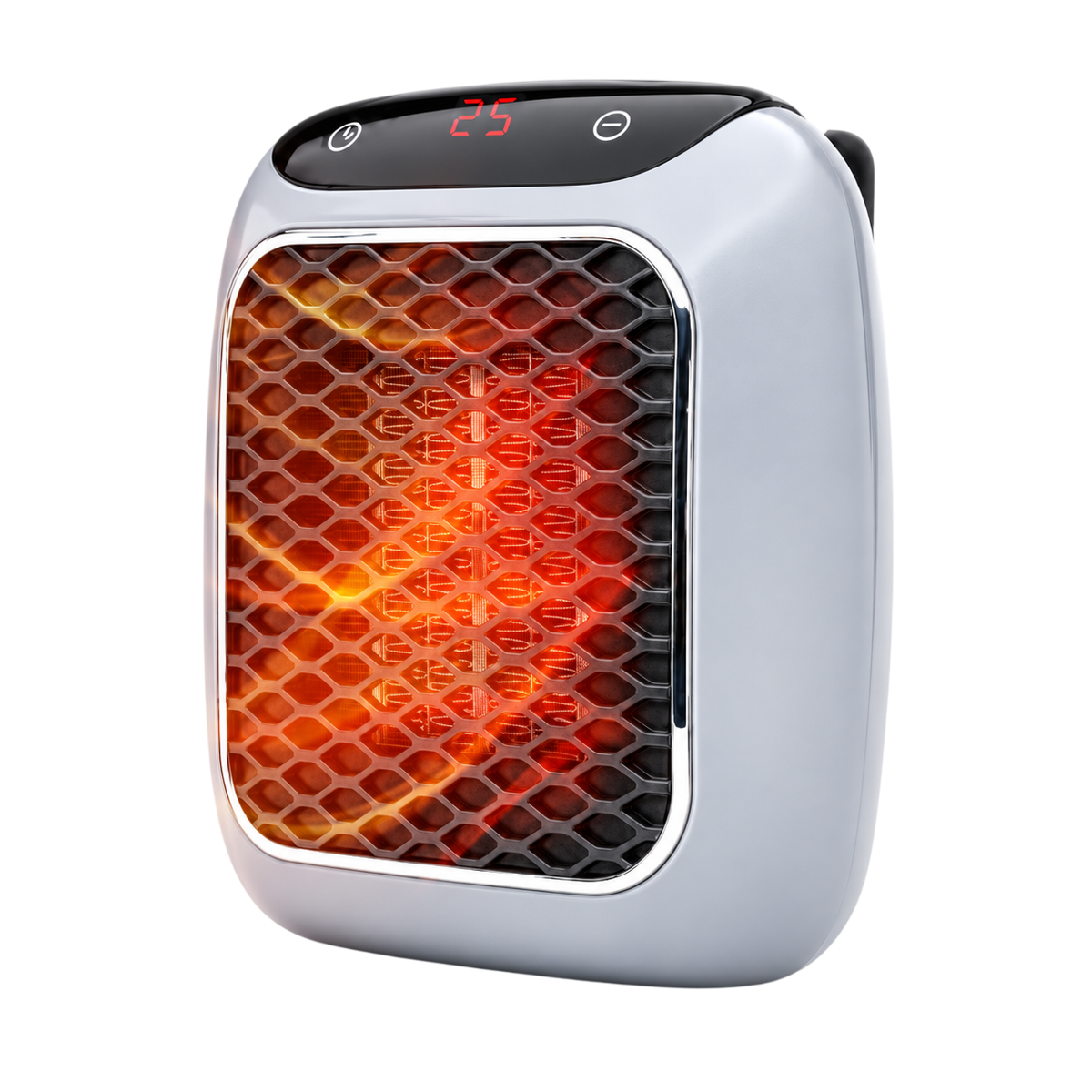
What makes a heater "ceramic"
Instead of a coiled wire, the element is a ceramic plate — usually PTC ceramic, which means its electrical resistance rises as it gets hotter. In practice the plate self-limits its own temperature: it cannot run away and glow red. A quiet fan moves room air across it. You get quick, even warmth without the scorched-dust smell of an exposed element.
Why people choose them
- Warm in minutes. The plate reaches working temperature in seconds; a small room feels different within about five minutes.
- Steadier heat. The ceramic mass keeps output smooth rather than pulsing.
- Safer surface temperatures. The housing stays touchable, which matters with children and pets in the room.
- Compact. Most are small enough to move room to room or plug straight into a socket.
- Quieter. A low hum instead of a roar.
What they are not
A portable ceramic heater is a single-room appliance. It will not heat a hallway, a staircase and two bedrooms at once, and it cannot outperform physics: 1.2 kW of electricity is 1.2 kW of heat whatever the marketing says. Rooms much over about 12 m², or rooms with an open external door, need more power or proper central heating. Sizing guidance is in the small room heater guide.
What to look for when buying
- A thermostat you can set to a temperature, not just high and low. This is the single biggest influence on your bill.
- A timer so it warms the room before you use it and switches itself off.
- Overheat protection with automatic shut-off.
- A remote if it will sit away from your chair or bed.
- UK three-pin plug and a sensible flex length so it reaches a wall socket without an extension lead.
- A filter if anyone in the house is dust-sensitive.
Running costs
Take the rating in kilowatts and multiply by your unit rate. A 1,200 W ceramic heater at 27p per kWh costs about 32p an hour at full output. Because the thermostat cycles the element once the room reaches temperature, real evening costs are usually noticeably lower. The full table is in running costs.
Ceramic vs the other options
Against a fan heater: quieter, better controlled, kinder air. Against an oil-filled radiator: much faster to warm a room, but the warmth stops sooner after switch-off. Against halogen: ceramic warms the air in the room rather than just the person in front of it.
RapidHeat in one paragraph
RapidHeat is a portable plug-in ceramic heater designed for rooms up to about 12 m², with an adjustable thermostat, timer, remote control, overheat cut-off and a washable filter. It ships free across the UK with a 30-day money-back guarantee, so you can test it in your own cold room rather than take our word for it.
Ready to warm your room in about 5 minutes?
Order RapidHeat today with free tracked UK delivery and a 30-day money-back guarantee.