Room by room
Electric greenhouse heating
The short answer
Greenhouse heating is not about warmth, it is about avoiding a hard frost on a handful of cold nights. Set the target low, insulate first, and the electricity involved is small.
Pick a target temperature
| Goal | Minimum temperature |
|---|---|
| Frost free — overwintering hardy fuchsias, geraniums, dahlia tubers | 2–5°C |
| Cool greenhouse — citrus, tender perennials | 7–10°C |
| Warm greenhouse — propagation and early sowing | 13–15°C |
Every extra degree multiplies the cost. Most UK gardeners only need the first row, and a heated propagator handles seedlings far more cheaply than warming the whole structure.
Insulate before you heat
- Line the inside with horticultural bubble insulation — the single biggest improvement.
- Replace cracked panes and seal gaps around the door and vents.
- Group plants together and lift pots off cold staging or paving.
- Use fleece over tender plants on the coldest nights as a second layer.
Wattage guidance
- 6 ft × 4 ft, bubble lined, frost free: 300–500 W with a thermostat
- 8 ft × 6 ft, bubble lined, frost free: 500–1,000 W
- 10 ft × 8 ft or cool greenhouse targets: 1,000–2,000 W
What it costs
A thermostatic heater in a frost-free greenhouse only runs on cold nights, and then only in bursts. A 500 W unit averaging two hours of actual running a night uses about 1 kWh — roughly 27p — and on mild nights nothing at all. Across a winter that is typically tens of pounds, not hundreds. Method in running costs.
Safety and suitability
Greenhouses are damp, and damp plus mains electricity needs care. Purpose-made greenhouse heaters are built with that environment in mind; a domestic room heater is not. If you use one in an outbuilding, it must be kept dry, raised off the ground, well clear of watering and foliage, fed from a properly installed weatherproof supply, and fitted with overheat protection. Never run a heater in a greenhouse where condensation can drip onto it.
Also make sure air can circulate — stagnant, humid air encourages botrytis and mildew, so ventilate on mild days even in winter.
Where RapidHeat fits
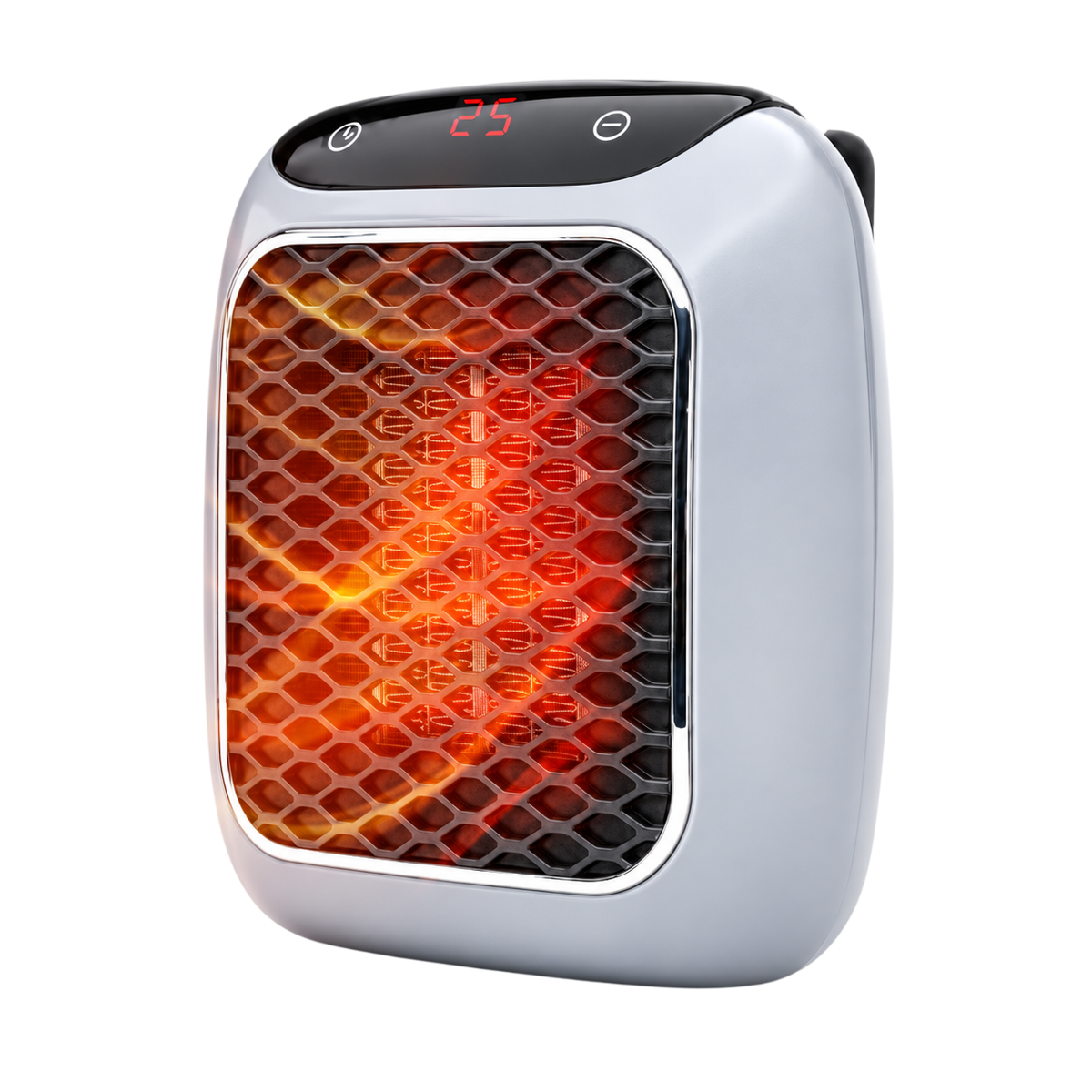
RapidHeat is designed as an indoor room heater, so its natural home is a garden office, workshop or the house itself rather than a wet greenhouse. If you want low-cost frost protection under glass, choose a heater specified for horticultural use; for people-heating in a dry outbuilding, see shed and workshop heating.
Warmth where you actually spend time
Order RapidHeat today with free tracked UK delivery and a 30-day money-back guarantee.