Honest UK heater comparison
RapidHeat vs fan, oil-filled, halogen and central heating
The short answer
RapidHeat is strongest when one enclosed room needs quick, controllable warmth. Choose oil-filled for silent long sessions, infrared for direct warmth in a draughty space, or central heating when several rooms need heating.
Written and checked by the RapidHeat UK team · Last updated September 2026 · how we work out running costs
Key takeaways
- Choose RapidHeat for quick, controlled warmth in one enclosed room up to about 12 m² — not for whole-house heating.
- Choose an oil-filled radiator when silence and long, steady sessions matter more than speed or floor space.
- At the same wattage and run time, electric heaters cost the same: controls, room size and hours used change the final bill.
How transparent is this comparison?
RapidHeat UK sells RapidHeat. This guide compares heating methods using published product facts and standard electricity calculations; it is not an independent laboratory test. Features vary between competing models, so check the specification of any heater you are considering.
The quickest honest verdict
There is no single “best heater” for every UK home. The right answer depends on whether you want to warm one person, one room or several rooms; how long the heat is needed; whether fan noise bothers you; and how much floor space you can spare.
- RapidHeat: quick, controlled warmth in one enclosed room up to about 12 m².
- Basic fan heater: often the lowest purchase price for occasional short use.
- Oil-filled radiator: silent, steady heat for a long session.
- Halogen or infrared: direct personal warmth in a draughty space.
- Central heating: the sensible choice when several rooms need heat.
RapidHeat vs other heaters at a glance
The ranges below describe common UK products, not every model. “Fast” describes how soon you feel heat, not a guarantee that every room reaches a set temperature in the same time.
| Heating option | Heat and speed | Noise | Controls | Best use | Main compromise |
|---|---|---|---|---|---|
| RapidHeat ceramic 800 W or 1,200 W | Fan-assisted warm air. Warm air quickly; room comfort depends on conditions. | Audible airflow | Thermostat, timer and remote | An enclosed room up to about 12 m², used on and off | No retained heat; not silent |
| Basic fan heater Often 1,000–2,000 W | Fan-assisted warm air. Fast direct warm air. | Usually audible | Varies by model | Low upfront cost and occasional short bursts | Can be bulky or basic; check controls and safety features |
| Oil-filled radiator Often 1,000–2,500 W | Radiant and convected heat. Slower to feel, then steady. | Silent apart from occasional clicks | Usually thermostat; timers vary | Long, quiet sessions in one room | Heavy, takes floor space and warms slowly |
| Halogen or infrared Often 400–1,200 W | Direct radiant heat. Immediate on the person in its line of sight. | Usually silent | Varies by model | Personal warmth in a draughty or hard-to-heat space | Less effective at warming all the room air |
| Gas central heating Not directly comparable | Whole-home radiators. Slower system-wide warmth. | Usually unobtrusive | Boiler, programmer and radiator valves | Several occupied rooms or the whole home | Can heat rooms nobody is using |
Which heater fits your situation?
| Your situation | Best starting point | Why |
|---|---|---|
| Home office for a few hours | RapidHeat | Quick warm air, compact size and timed control |
| Bedroom where silence is essential | Oil-filled radiator | No fan noise and gentle background warmth |
| Draughty garage workbench | Infrared heater | Directly warms the person instead of all the air |
| Occasional ten-minute burst | Basic fan heater | Low purchase price can matter more than extra controls |
| Family using several rooms | Central heating | A whole-home system is better suited to the job |
| One enclosed room up to about 12 m² | RapidHeat | Designed for focused, controllable room heating |
Running costs: compare watts, not marketing claims
All direct electric heaters turn almost all the electricity they draw into heat at the point of use. At the same wattage and run time, they cost the same. The calculation is: watts ÷ 1,000 × hours × unit rate.
These examples use 27p per kWh and assume continuous full-power operation. Check your own bill because tariffs vary.
| Example | Power | One hour flat out | Three hours flat out |
|---|---|---|---|
| RapidHeat low | 800 W | 21.6p | 64.8p |
| RapidHeat high | 1,200 W | 32.4p | 97.2p |
| Example oil-filled radiator | 1,500 W | 40.5p | £1.22 |
| Example fan heater | 2,000 W | 54p | £1.62 |
What a thermostat can — and cannot — promise
A thermostat switches the heating element off when the set temperature is reached, so the heater may use less than the full-power figures above. There is no honest universal “half price” estimate: cycling depends on room size, insulation, outdoor temperature, draughts and the temperature selected. Use the running-cost calculator with your own tariff and expected hours for a more useful estimate.
RapidHeat vs a basic fan heater
Both use a fan to move warm air, so both can feel warm quickly. RapidHeat combines two power settings with a thermostat, timer and remote in a compact socket-mounted design. Some entry-level fan heaters have only simple switches; others also include thermostats and safety cut-outs. A basic model can therefore be a sensible low-cost buy for occasional use, while RapidHeat better suits someone who values compact size and convenient control.
RapidHeat vs an oil-filled radiator
RapidHeat moves warm air immediately and takes up no floor space. An oil-filled radiator takes longer to warm but operates without a fan and continues releasing some heat while its oil and casing cool. Choose RapidHeat for shorter, responsive sessions; choose oil-filled when silence and steady background warmth over several hours matter more. See the full ceramic vs oil-filled heater comparison.
RapidHeat vs halogen or infrared heat
RapidHeat warms and circulates room air. Halogen and infrared heaters primarily warm people and surfaces in their line of sight, which can be more useful in a draughty garage or beside a workstation. Move out of the radiant beam and the effect drops. For an enclosed bedroom or office where the air itself should feel warmer, ceramic fan heat is usually the closer match.
RapidHeat vs central heating
Gas central heating usually wins when several rooms need warmth because gas costs less per unit of energy and the system is built for whole-home distribution. RapidHeat can make more sense when one person occupies one room for a limited period and the alternative is warming several unused rooms. The answer changes with the home, tariff and number of rooms, so use our worked central-heating comparison rather than assuming one option always costs less.
What RapidHeat actually includes
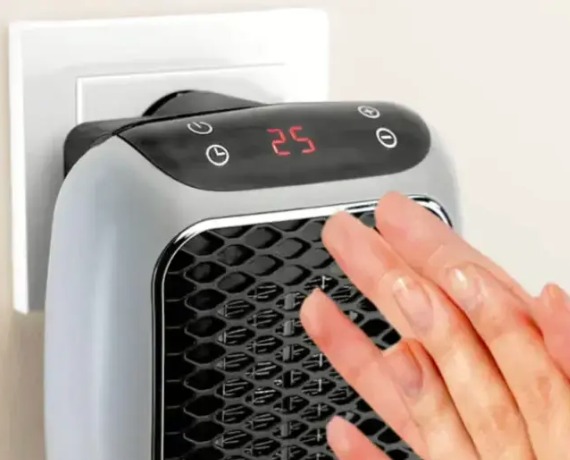
Published product facts
- Heating type
- PTC ceramic convection
- Room size
- Up to 12 m² (about 130 sq ft)
- Controls
- Touch panel plus handheld remote
- Timer
- Yes, built in
- Thermostat
- Adjustable, holds your set temperature
- Safety
- Overheat protection and automatic shut-off
- Noise
- Quiet running, suitable for bedrooms
- Power supply
- UK three-pin plug, 220–240 V
Safety matters whichever heater you choose
- Follow the manufacturer’s instructions and keep the air inlet and outlet clear.
- Use a suitable wall socket; do not overload an extension lead or adaptor.
- Keep heaters away from curtains, bedding, furniture and anything combustible.
- Do not leave a portable heater running unattended or while sleeping.
- For bathrooms, use a properly bathroom-rated appliance in a permitted zone. RapidHeat is not advertised as bathroom-rated, so keep it outside wet zones and away from splashes.
If RapidHeat fits your room
RapidHeat is the strongest fit when you need focused warmth in one enclosed room up to about 12 m², want thermostat and timer control, and accept some fan noise. It is not the right buy for a large open-plan room, silent overnight heat or whole-home heating.
Compare the RapidHeat bundles
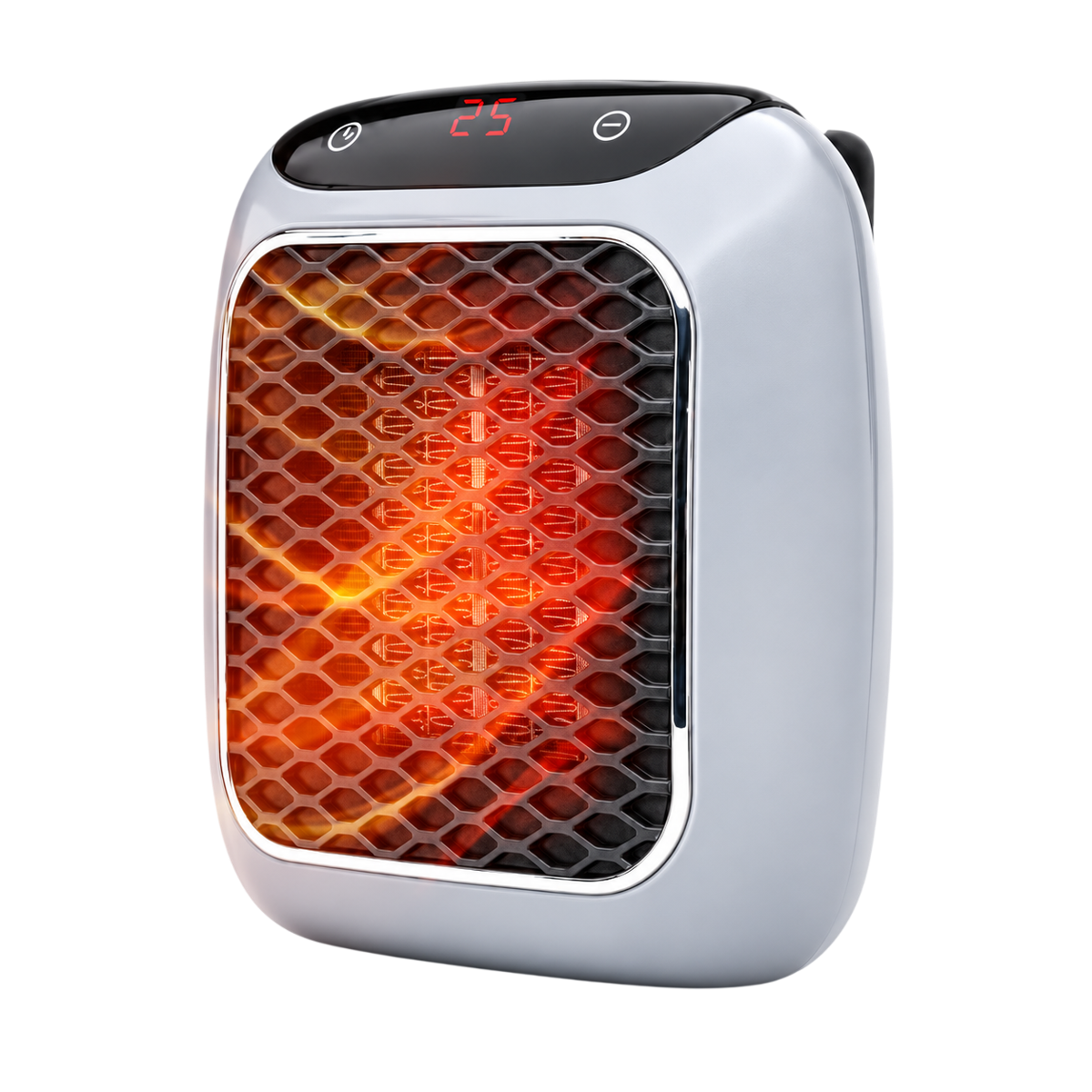
One heater costs £49.95. Three cost £110.89 — about £36.96 each. All bundles include free tracked UK delivery, a 12-month warranty and a 30-day money-back guarantee.
- Prices in GBP
- No subscription
- UK support
- Secure payment checkout
Check the room-size and noise guidance above before ordering.
The bottom line
Buy RapidHeat for quick, controllable heat in one small enclosed room. Buy an oil-filled radiator for silent, long-duration warmth; infrared for a person in a draughty space; a basic fan heater when upfront price is the deciding factor; or use central heating when several rooms need warmth. The best choice is the one matched to the job, not the loudest claim.
RapidHeat ceramic heater
4.8/5 · 1,247 UK customers£49.95· £89.91 for two · £110.89 for three (about £36.96 each)
- Thermostat, timer and remote
- Warm room in about 5 minutes
- Free tracked UK delivery
- 30-day money-back guarantee





Perfect for my cold office
I have a small office with a door that gets really cold because the building management keeps the winter temperature far too low for comfort. I plugged this into the socket above my desk and now I am warm without anyone even knowing it is there. I love it.
Great in the bathroom
We use it to take the chill off the bathroom before the kids' bath time. Warms up fast and the timer is handy. Four stars only because I wish the display were a little dimmer at night.
Worth being straight about: RapidHeat is built for rooms up to about 12 m². It is not a replacement for central heating and it will not transform an open-plan lounge or an uninsulated garage. If it is not right for your room, send it back within 30 days.
Questions people ask
- Is RapidHeat better than a cheap fan heater?
- It is the better fit when you want a compact heater with a thermostat, timer and remote for regular use in one small room. A basic fan heater can be the better choice when the lowest purchase price matters and you only need occasional short bursts. Features vary, so compare the exact model rather than assuming every fan heater is the same.
- Should I buy RapidHeat or an oil-filled radiator?
- Choose an oil-filled radiator for silent, steady background warmth over a long session and some retained heat after switch-off. Choose RapidHeat when you value faster warm air, compact size and easy controls in a room used for shorter periods.
- Is RapidHeat cheaper to run than an oil-filled radiator?
- Not automatically. Cost is wattage in kilowatts multiplied by hours and your electricity unit rate. At the same wattage and run time, both cost the same. A thermostat and timer can reduce run time, but real cycling depends on insulation, weather, room size and the temperature you set.
- Is RapidHeat better than central heating?
- Only for the job it is designed to do. It can make sense when one person needs one enclosed room warm for a limited time. Gas central heating is usually the better choice when several rooms or the whole home need heating, while a heat pump can be more efficient for whole-home heating.
- Where is RapidHeat not the right choice?
- Choose another option for large open-plan rooms, whole-house heating, silent overnight background heat, uninsulated garages or permanent bathroom heating. RapidHeat is intended for enclosed rooms up to about 12 m² and should be kept outside wet zones and away from splashes.
Compare the options in more detail
RapidHeat vs LumiHeat
What to compare between the two plug-in heaters.
RapidHeat vs TempHeat
What to compare between the two plug-in heaters.
Ceramic vs oil-filled heaters
Which type suits your room, your habits and your bill.
Electric heater vs central heating
When one room beats firing up the whole boiler.
Electric heater running costs
The simple formula plus cost per hour by wattage.
Warm one room without pretending one heater suits every home
Choose RapidHeat when quick, controlled warmth in a small enclosed room is the job.
Sold direct by RapidHeat UK. Secure checkout, free tracked UK delivery.